




What are Digital Display Systems?



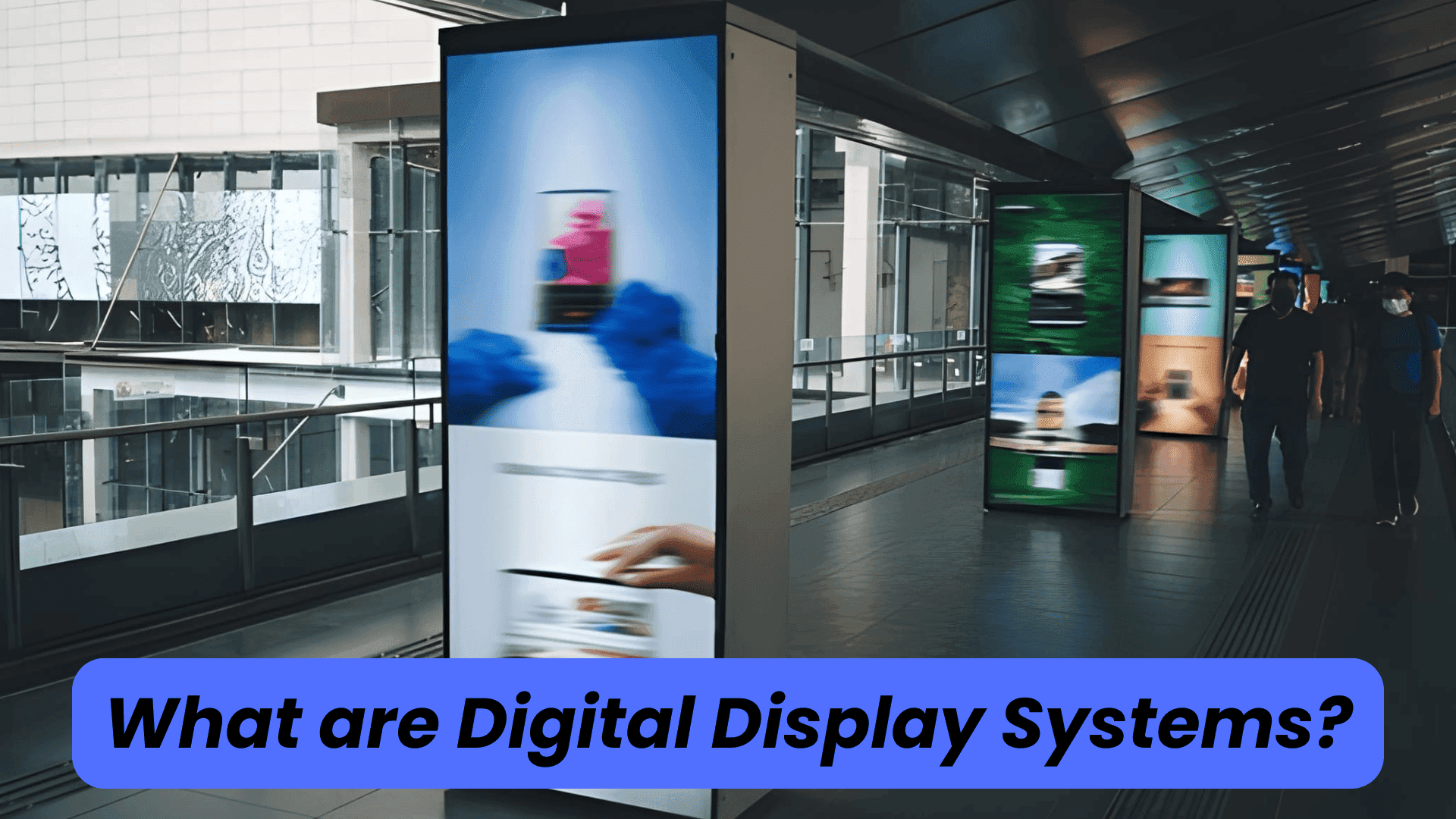
We thrive at a time when attention spans are decreasing. Today, the average human attention span has reduced to 8.25 second, which is even shorter than a goldfish’s (9 seconds). This marks a 33% drop from 12 seconds in 2000. What makes advertisement a challenge is the diminishing attention of your audience.
Now, can you recall the last instance when you walked into a room and immediately noticed a screen grabbing your attention? That’s the power of digital screens. Static posters and printed notices don’t make the desired impact.
People expect information that’s clear and visually appealing. Businesses using digital screens for advertising report higher engagement and improved recall.
Today, digital screen boards have made their way to retail stores, classrooms, and hospitals. In this guide, we’ll explain what display systems are and their components. We’ll also share valuable tips to help you choose the right solution.
What Is a Digital Display System?
You can think of a digital display system as an electronic digital screen or a digital screen board. We customize these solutions to enrich the user experience with multimedia content like:
- Images
- Videos
- Announcements
Businesses can instantly control the displayed content remotely in real time.
Digital screens comprise three main parts – screens, media players, and software. These components make information dynamic and easy to update.
Here are some real-life examples showing the versatility of digital screens.
- Instant updates of lessons in schools
- Sharing of live performance on dashboards in offices
- Stores showcasing flash promotions to attract buyers
Digital screen boards work equally well for teaching, advertising, corporate communication, or even home entertainment. Naturally, these are one of the most practical tools to engage users.
Components of a Digital Display System
A digital display system comprises of three main components – hardware, software, and connectivity. Together, they transform ordinary communication into an engaging one.
Hardware
The physical components of a modern digital display system include LCD, LED, OLED, transparent OLED, and interactive touchscreens.
However, each of these screens has different uses, which can range from high-contrast advertising displays to sleek, modern screens in offices. Academic institutions use digital screens for teaching in classrooms. Teachers use these boards to engage with students in real time.
Software
We use advanced content management system (CMS) for:
- Scheduling displayable content
- Organizing the sequence of slides
- Analyzing multimedia
Businesses using digital screens for advertising can roll out promotions instantly. Companies, on the other hand, can share their internal KPIs. Ultimately, the software determines the content that should be displayed on the screen.
Connectivity
Reliable connections are essential for your digital screens to run smoothly. Our advanced display systems support:
- Wired connections
- Wi-Fi
- Cellular networks
It’s due to this flexibility that restaurants can change menus, or banks can update promotional content remotely. Seamless connectivity goes a long way in saving time and effort for your staff.
Advantages of Digital Display Systems
Why are businesses increasingly turning to digital screens? The answer lies in the wide range of benefits they offer.
1. Cost-Efficiency
Digital systems can save recurring costs on printing, design, and logistics, which gives them an edge over traditional print or analog signage.
2. Flexibility & Scalability
Whether you’re using a digital screen to study, advertise, or display information, they are flexible. They can also be customized – depending on where you’re using them.
3. Engagement
Some screens with touch options and dynamic visuals work faster, grabbing the attention in seconds. This significantly improves communication and retention rates. In a survey, it was found that 70% of the participants recalled a digital video display that they recently came across.
Choosing the Right Digital Display System
Here’s a step-by-step guide to help you make your decision.
Determine the Purpose
Are you looking for a simple digital screen for wall to be used indoors? Or is it for an advertisement in a retail store? Define the purpose, or consult us to pick a system customized for your needs.
Screen Size & Resolution
LED digital screens come in Full HD, 4K, and even 8K. However, a bigger screen size doesn’t mean it will work better for you. Even if you have a large screen and the pixel density is poor, the display will look grainy. On the other hand, a high resolution screen, even if smaller, can be impressively clear.
Transform Your Digital Displays with Wauly
Modern screens have completely changed how we connect and share ideas with each other. At Wauly, we customize these digital screens for each client. We understand that the communication priorities largely vary from schools to businesses and homes to retail stores.
If you’re ready to switch to digital screens for better exposure, it’s time you scheduled a consultation with us.
Recent blogs

Successfully transition from static displays to digital signage
If you need a reason to transition from static to digital signage, here are three
Read MoreIncreasing consumer purchases and reducing marketing costs
Numbers don’t lie. Studies suggest that 76% of buyers claim to enter.. store for the first time ever because of signage
Read MoreWhy digital signage solutions are best for restaurants
As a restaurateur, you would want your eatery to be people’s first preference.
Read MoreMost Recent blogs
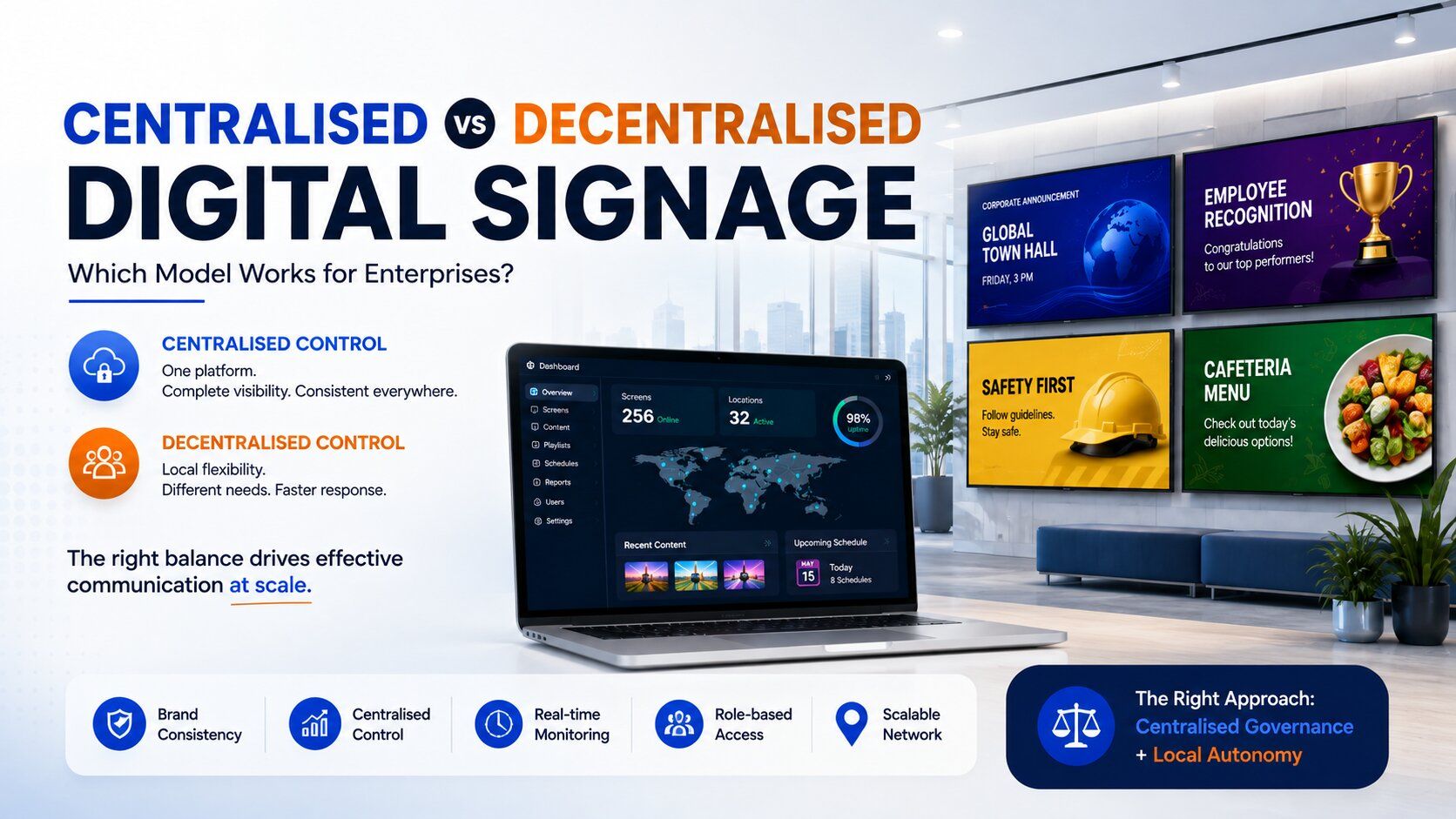
Digital Signage Software: Centralized vs Decentralized Models
A practical look at how enterprises can balance centralised control and local flexibility when managing digital signage across multiple offices, teams and locations.
Read More
Digital Signage Software: Offline’s New Performance Marketing Benchmark
Explore how digital signage software is redefining performance for retail and other offline businesses by enabling centralized control, smart scheduling, consistent communication, and scalable screen management across every location.
Read More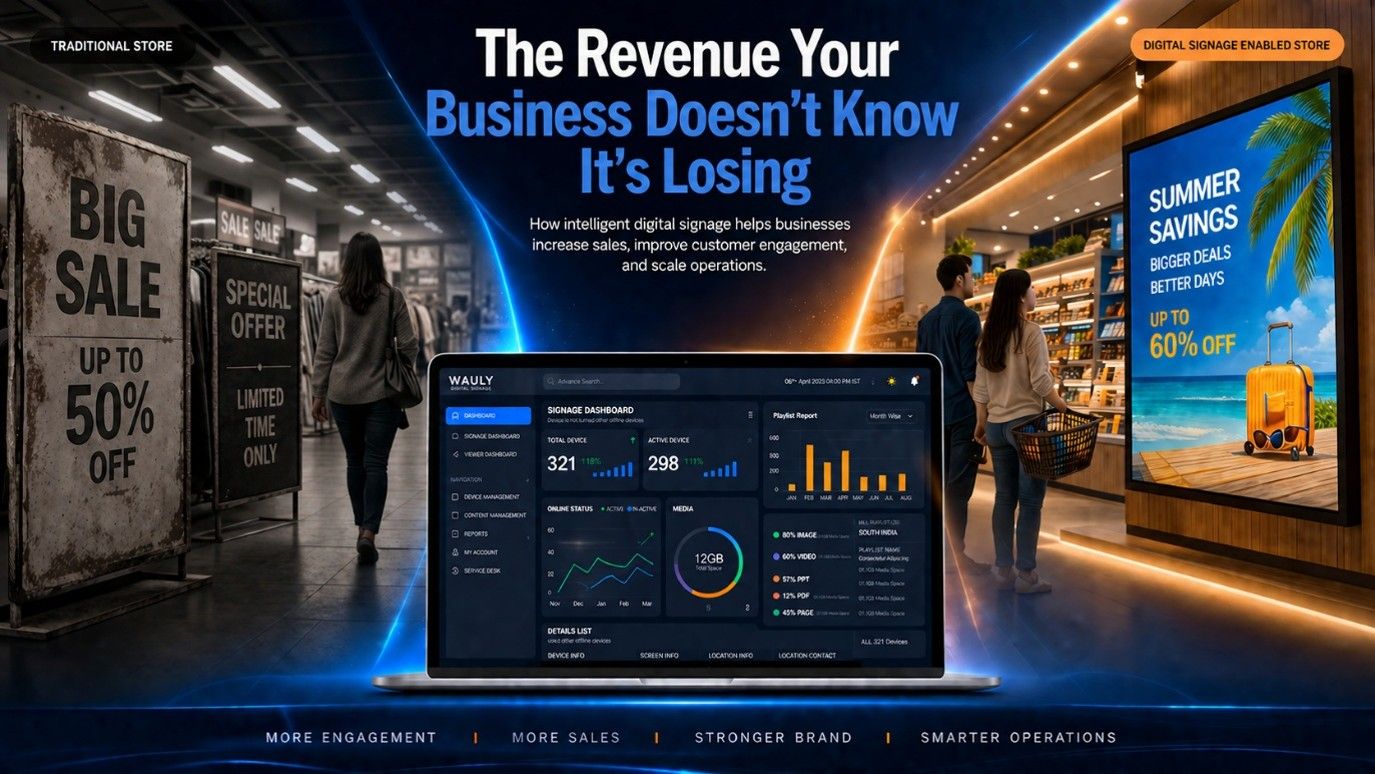
The Revenue Leak Most Businesses Never Measure: Why Digital Signage Is No Longer Optional
Every business invests to bring customers through the door, but many lose revenue once they're inside. Static posters, outdated displays, and manually managed screens fail to influence purchase decisions when they matter most. This blog explores how modern digital signage software helps businesses automate promotions, manage screens remotely, maintain brand consistency, and increase sales across multiple locations. Learn why the real value of digital signage lies not in the screens themselves, but in the software that powers them.
Read More
The Biggest Problem in Internal Communication Isn't Communication. It's Attention.
In today's workplace, information isn't rare, attention is. Organizations that continue measuring communication by the number of emails they send are solving yesterday's problem. The real challenge is ensuring important messages are actually seen, remembered, and acted upon.
Read More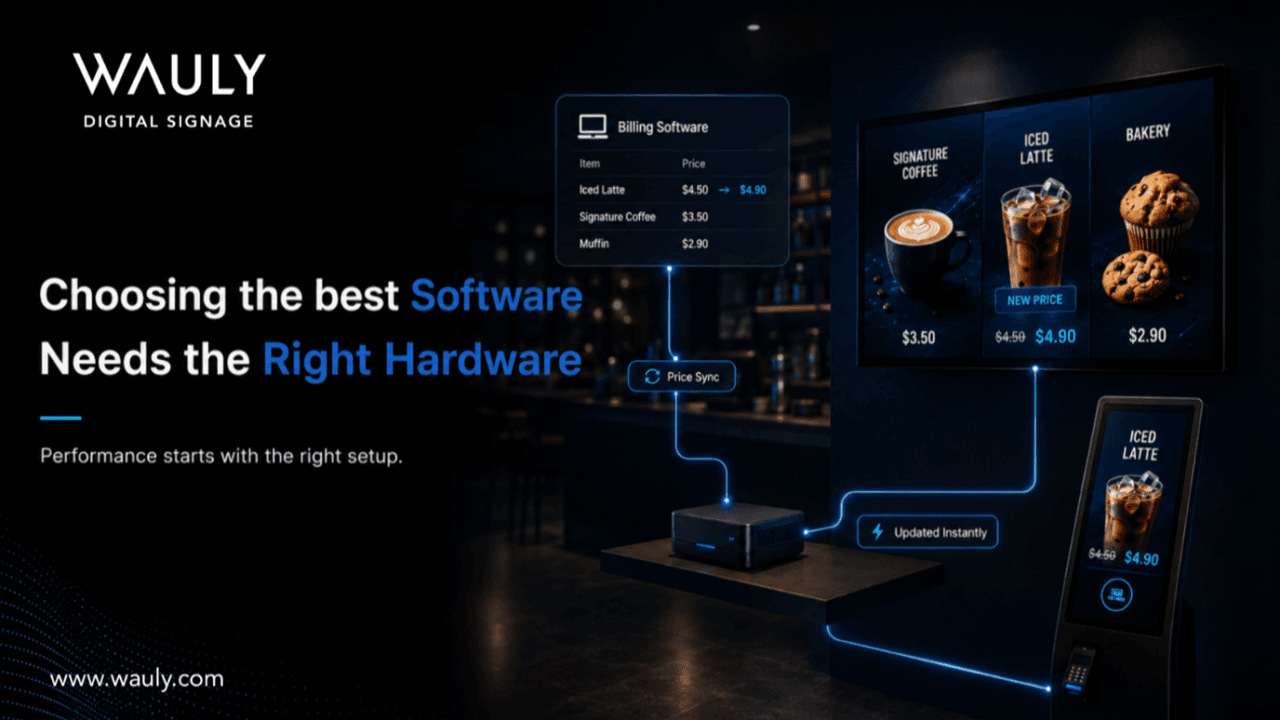
Why Choosing the Right Digital Signage Hardware Matters for QSR Businesses.
Why selecting the right digital signage hardware is just as important as choosing the right software for QSR businesses. It explores how factors such as heat, steam, humidity, operating hours, and outlet type influence display performance, and how Wauly helps brands choose the right hardware and software combination for reliable, centrally managed digital signage across every location.
Read More