




Digital Signage Software: Offline’s New Performance Marketing Benchmark



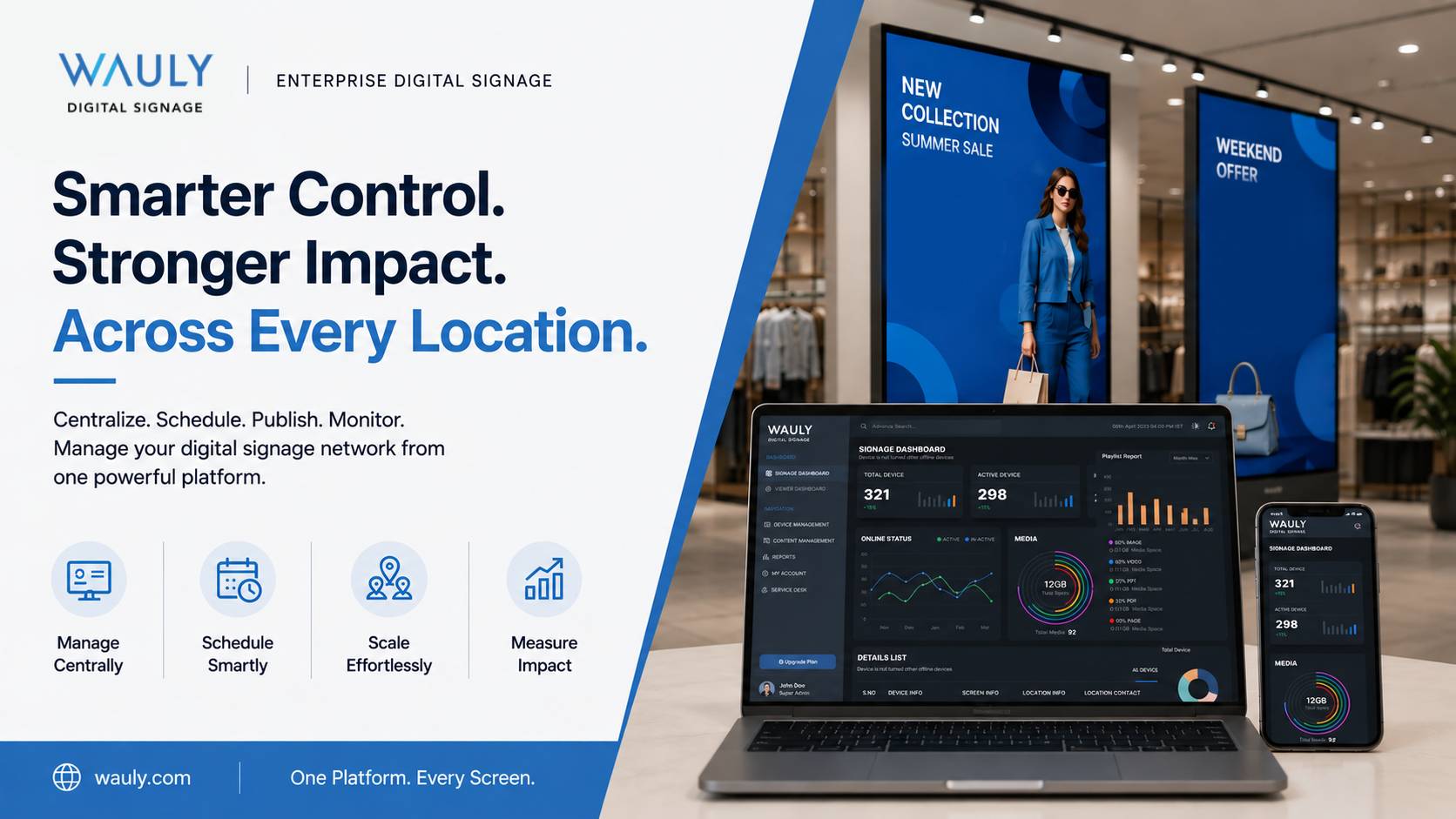
QSRs no longer buy screens. They invest in outcomes.
Large QSR chains are no longer asking whether to invest in digital signage. The real question is what works reliably at scale. The same question is increasingly being asked by growing eateries, food shops, dhabas, and multi-location restaurants expanding across cities. The answer is no longer determined by the screen alone.
The real performance benchmark is the digital signage software behind those screens.
A screen can display a menu. Software determines how quickly that menu can change, where it appears, when it plays, who controls it and whether hundreds of outlets can be managed consistently.
From Screens to Software-Managed Experiences
For a single restaurant, manually updating a screen may appear manageable. For a QSR chain operating dozens or hundreds of outlets, it quickly becomes an operational problem. Menus change. Prices change. Limited-time offers launch. Products go out of stock. Regional promotions differ. Breakfast needs to transition into lunch, and lunch into dinner.
Without a centralised digital signage software platform, every change can become a manual exercise. This is where digital signage starts moving from a display solution to a performance marketing infrastructure for offline businesses. The objective is no longer simply to put content on a screen. It is to deliver the right content, to the right location, at the right time, consistently.
The First Performance Filter Is Visibility
Visibility remains fundamental to digital signage performance.
In high-traffic environments, content needs to remain readable under different lighting conditions and viewing angles. This is particularly important for QSRs where customers may encounter screens while entering the outlet, standing in a queue, ordering at a counter or approaching a drive-thru. Formats such as LED display screens and outdoor digital screens therefore continue to play an important role.
But visibility alone does not guarantee performance.
A highly visible screen showing outdated pricing, an expired promotion or irrelevant content is still a missed marketing opportunity. This is where software becomes critical. A centralised digital signage CMS allows restaurant teams to update content remotely, ensuring that the message customers see reflects the current offer, menu or campaign.
Reliability Is More Than Keeping the Screen On
QSR outlets often operate for long hours, sometimes from early morning until late at night. That means digital signage needs to remain reliable throughout the customer journey. But reliability should not be measured only by whether the display is powered on.
The more important question is: Is the right content playing correctly on the right screen?
- A screen can be online while displaying outdated content.
- A campaign can be approved but fail to reach a particular outlet.
- A promotional creative can be scheduled incorrectly.
A screen can go offline without the central team immediately knowing. This is why modern digital signage software needs capabilities such as remote device monitoring, content status visibility and centralised control.
The goal is to move from reactive troubleshooting to proactive screen management.
Consistency Across Every Outlet
Consistency becomes one of the biggest challenges as restaurant networks grow. When different outlets use different content, schedules or manually managed media files, the customer experience can become inconsistent.
- One restaurant may display the latest promotion, while another continues to show an expired offer. One location may have updated pricing while another still displays the previous menu. This is where a centralised restaurant digital display ecosystem becomes valuable.
- With the right software, corporate teams can publish approved content across all outlets while maintaining flexibility for regional or store-specific campaigns.
For example: National campaign: All outlets, Regional promotion: Selected cities, City-level campaign: Selected outlets, Store-level communication: Individual location.
The software becomes the control layer connecting the brand's marketing strategy with its physical locations.
Scheduling Turns Digital Signage Into a Marketing Channel
A static display communicates continuously. A software-managed display can communicate contextually. Consider a QSR menu operating throughout a day:
Breakfast → Lunch → Evening → Dinner
Each period can have different products, offers and customer priorities. With digital signage software, these transitions can be scheduled automatically. The same principle can be applied to:
- Limited-time offers
- Festival campaigns
- Weekend promotions
- Happy-hour promotions
- New product launches
- Regional offers
- Cross-selling campaigns
- Seasonal menus
This makes digital signage closer to a programmable marketing channel rather than a digital poster. Research into digital menu environments has also examined how electronic menus can influence customer satisfaction and behavioural intentions in restaurant environments. Source: Advances in Hospitality and Tourism Research
The important distinction is that simply installing a digital menu board does not create performance. The ability to continuously control and optimise what the customer sees is what creates the opportunity for performance.
Placement Still Determines Performance
Software cannot compensate for poor physical placement. Screens still need to be positioned around customer movement, viewing angles and decision-making points. This is why restaurant display boards, advertising display screens and LED display boards for shops are often placed at strategic points such as entrances, ordering counters, waiting areas and drive-thru lanes.
However, software allows the same physical screen to perform different marketing roles throughout the day. A screen near the ordering counter can promote a high-margin combo during lunch. The same screen can promote a new product during the evening. A promotional screen near the entrance can highlight a limited-time campaign.
The physical placement remains important, but software determines how that physical asset is utilised over time.
Scale Is Where Software Becomes Essential
What works in one outlet can become difficult to manage across 50, 100 or 500 outlets. This is the point where manual content management begins to break down.
- Sending files through email.
- Using USB drives.
- Calling individual outlets.
- Asking store teams to replace content.
- Maintaining separate folders for every location.
These processes may work temporarily, but they become increasingly difficult to govern as the network expands. A scalable digital signage software platform allows businesses to manage their screen network centrally.
- Content can be organised by location, campaign or screen group.
- Updates can be pushed remotely.
- Schedules can be automated.
- Permissions can be controlled.
- Screen status can be monitored.
This creates an operational advantage that hardware alone cannot provide. The growing adoption of digital signage in Pune and other major business markets reflects a broader shift towards scalable digital communication infrastructure across offline businesses.
The New Meaning of Performance
Offline businesses have traditionally measured marketing performance through footfall, transactions, average order value and repeat purchases. Digital signage introduces another layer. Brands can now think about the performance of the communication system itself.
- How many locations received a campaign?
- How quickly was a promotion updated?
- How consistently was the campaign displayed?
- Which screens were active?
- How many locations experienced downtime?
- How efficiently can the marketing team launch a new campaign across the network?
These questions shift digital signage from a purely visual investment towards an operational and marketing infrastructure. This is particularly important for QSRs because their competitive advantage often depends on speed, consistency and the ability to execute campaigns across multiple locations.
The Benchmark Has Changed
The benchmark for digital signage is no longer simply: "How good is the screen?"
It is: "How effectively can the entire screen network be managed?"
For QSR chains, restaurants, canteens, food shops and growing food businesses, the combination of reliable hardware and intelligent digital signage software creates a more scalable model.
- The screen provides visibility.
- The content creates the message.
- The software provides control.
And the operating model determines how effectively all three work together. That is why the next generation of offline performance marketing will not be defined simply by how many screens a business installs.
It will be defined by how intelligently those screens are managed, how quickly content can be activated, and how consistently the brand can communicate across every location.
Digital signage is no longer just a screen on the wall. It is becoming an always-on performance marketing infrastructure for the physical world.
Recent blogs
Successfully transition from static displays to digital signage
If you need a reason to transition from static to digital signage, here are three
Read MoreIncreasing consumer purchases and reducing marketing costs
Numbers don’t lie. Studies suggest that 76% of buyers claim to enter.. store for the first time ever because of signage
Read MoreWhy digital signage solutions are best for restaurants
As a restaurateur, you would want your eatery to be people’s first preference.
Read MoreMost Recent blogs
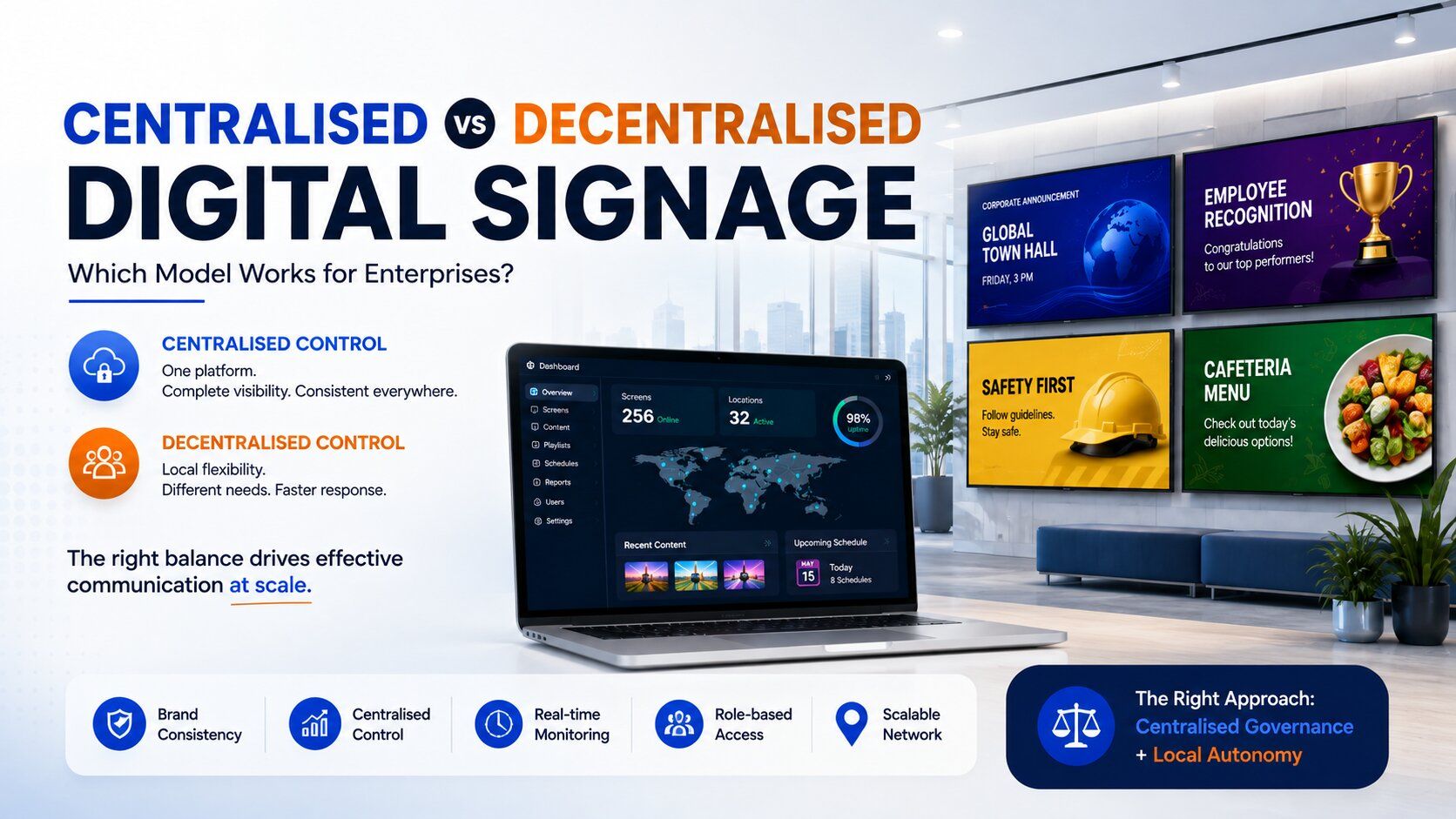
Digital Signage Software: Centralized vs Decentralized Models
A practical look at how enterprises can balance centralised control and local flexibility when managing digital signage across multiple offices, teams and locations.
Read More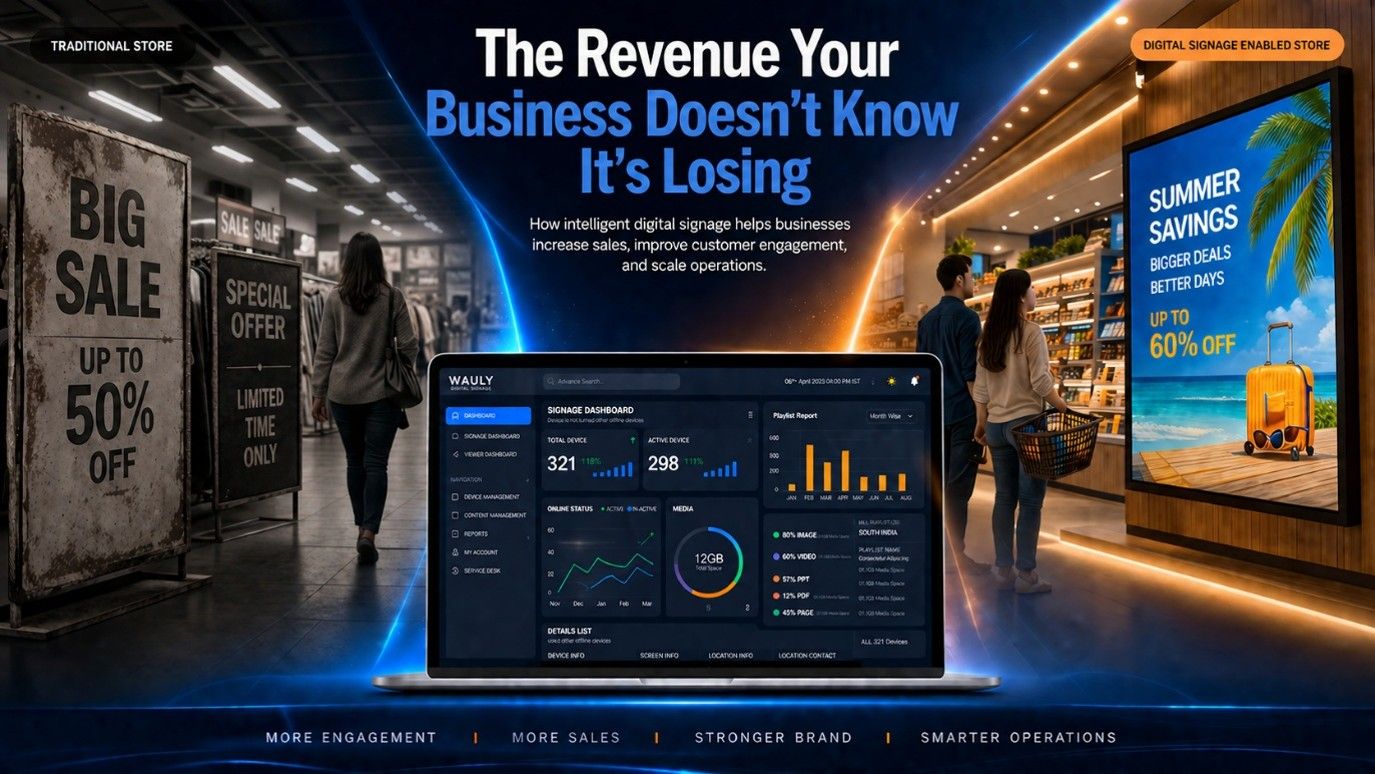
The Revenue Leak Most Businesses Never Measure: Why Digital Signage Is No Longer Optional
Every business invests to bring customers through the door, but many lose revenue once they're inside. Static posters, outdated displays, and manually managed screens fail to influence purchase decisions when they matter most. This blog explores how modern digital signage software helps businesses automate promotions, manage screens remotely, maintain brand consistency, and increase sales across multiple locations. Learn why the real value of digital signage lies not in the screens themselves, but in the software that powers them.
Read More
The Biggest Problem in Internal Communication Isn't Communication. It's Attention.
In today's workplace, information isn't rare, attention is. Organizations that continue measuring communication by the number of emails they send are solving yesterday's problem. The real challenge is ensuring important messages are actually seen, remembered, and acted upon.
Read More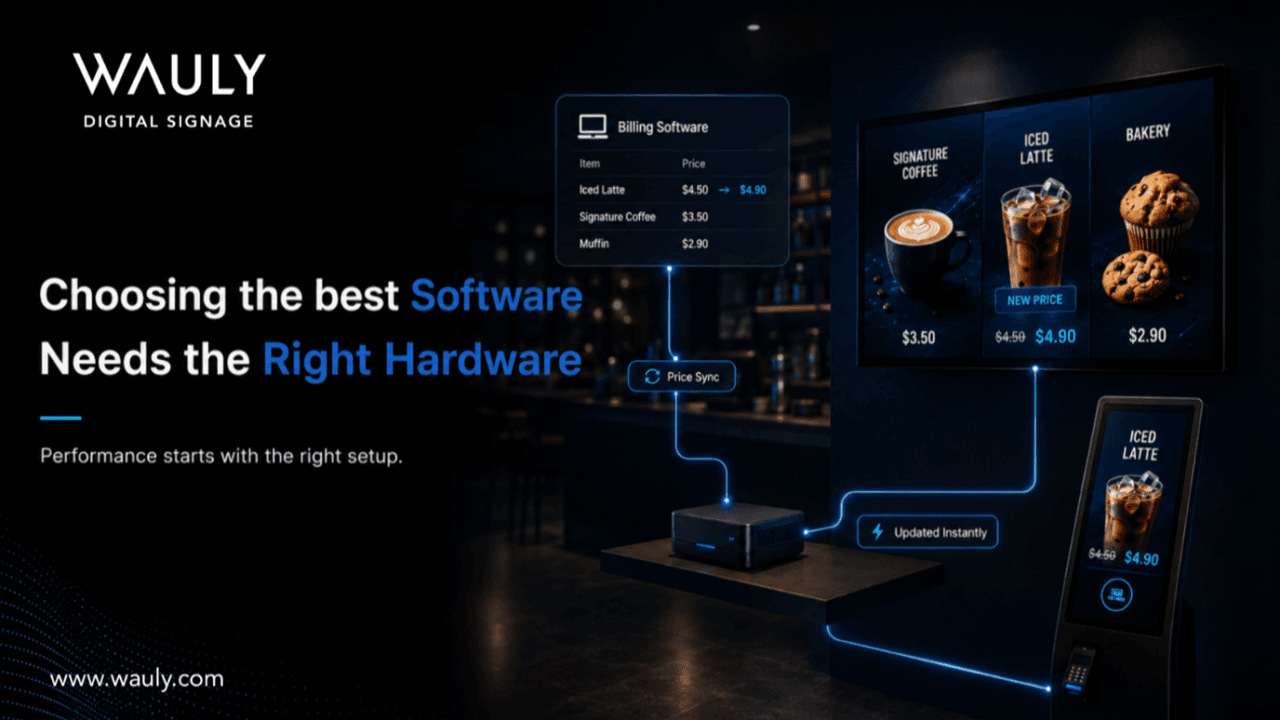
Why Choosing the Right Digital Signage Hardware Matters for QSR Businesses.
Why selecting the right digital signage hardware is just as important as choosing the right software for QSR businesses. It explores how factors such as heat, steam, humidity, operating hours, and outlet type influence display performance, and how Wauly helps brands choose the right hardware and software combination for reliable, centrally managed digital signage across every location.
Read More
6 Innovative Uses for Digital Display Boards
Digital display boards offer real-time, eye-catching content that boosts foot traffic and engagement—far more effectively than outdated static signs.
Read More