




Why Choosing the Right Digital Signage Hardware Matters for QSR Businesses.



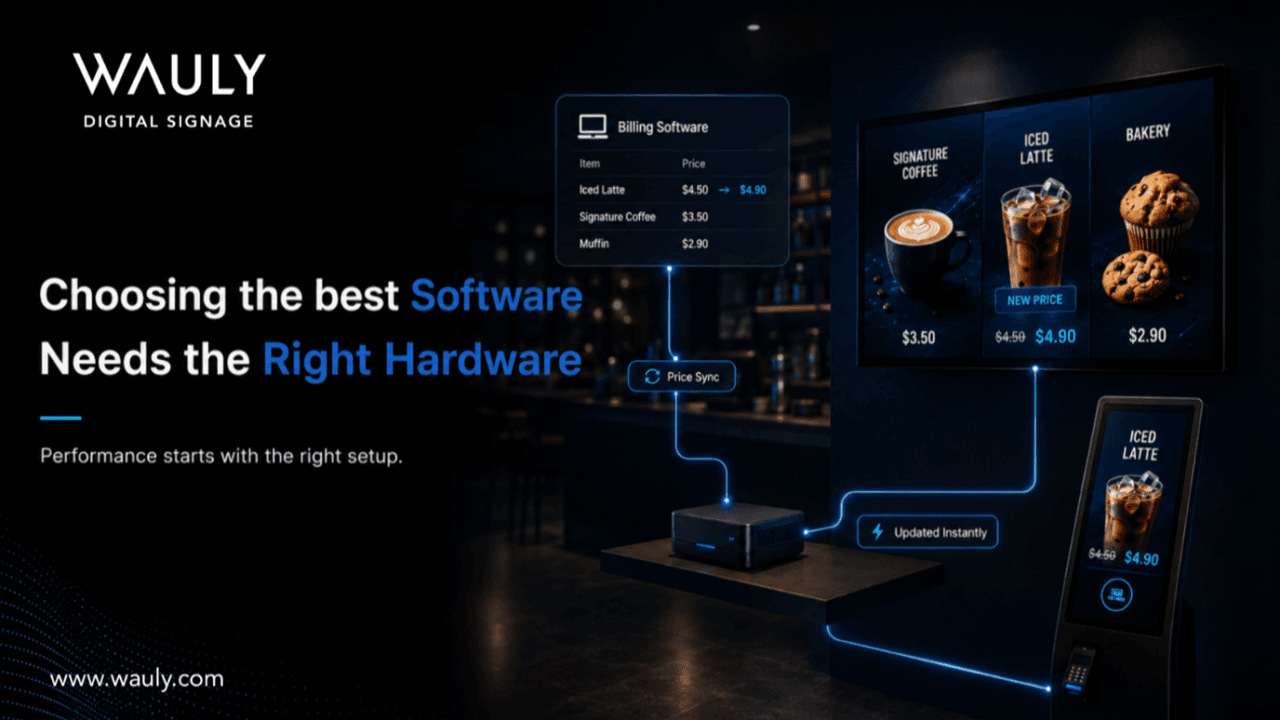
Built for Moisture. Built For QSR
For a QSR brand, the success of digital signage does not depend on software alone.
The right hardware matters just as much.
A screen placed inside a restaurant, cloud kitchen, food court, or takeaway counter is exposed to real operational pressure every day. Heat from cooking zones, steam from kitchens, grease-heavy air, repeated cleaning, humidity, and long operating hours all affect how well a display performs over time.
Where Most QSR Businesses Go Wrong
This is where many QSR businesses make the wrong decision.
They choose a screen based only on size, price, or brightness.
But in a QSR environment, a display must be selected based on where it will be installed, how close it is to the kitchen, how much moisture it will face, how many hours it will run, and what kind of content it will display.
Digital Signage Is More Than Just Software
At Wauly, we do not look at digital signage as just software running on any screen.
We help QSR brands identify the right hardware for the right location, and then connect that hardware with Wauly’s digital signage software for centralised content control.
Different Locations Need Different Displays
For front-counter menu boards, the requirement may be high brightness, strong viewing angles, and consistent colour quality.
For kitchen-facing or service-zone displays, the priority shifts to durability, moisture resistance, heat tolerance, and protection from steam and grease.
For takeaway windows, drive-thru zones, and outdoor-facing areas, the screen must be evaluated for humidity, rain exposure, temperature changes, and visibility in changing light conditions.
Why Hardware Selection Is Critical
This hardware selection is critical because the wrong display can lead to fading visuals, reduced brightness, frequent maintenance, and operational disruption.
In a high-speed QSR environment, even a small display failure can affect menu visibility, ordering speed, and customer experience.
How Wauly Helps
Wauly helps brands avoid this gap.
Our team studies the outlet format, kitchen conditions, screen placement, operating hours, content requirement, and environmental exposure before recommending the right display hardware.
Based on this assessment, we provide suitable digital signage hardware along with Wauly’s CMS, ensuring the screen is not only installed correctly but also performs reliably in real conditions.
Every QSR Outlet Is Different
This is especially important for large QSR chains and fast-growing food brands where every outlet may not have the same layout.
A mall outlet, a high-street store, a cloud kitchen, a food court counter, and a drive-thru format may all need different screen specifications.
Wauly helps standardise this decision.
One Partner Instead of Multiple Vendors
Instead of customers having to manage separate screen vendors, software providers, installation teams, and maintenance partners, Wauly provides an end-to-end approach.
From recommending the correct hardware to enabling centralised content updates, we help QSR brands build a signage network that is easier to manage and more reliable at scale.
The Result
The result is not just better visibility.
It is better operational control.
With Wauly, QSR brands can update menus, pricing, combos, offers, and time-based content across outlets from one central system.
When paired with the correct hardware, these updates remain visible, clear, and reliable even in demanding kitchen and restaurant environments.
Final Thoughts
In a category where speed, consistency, and durability matter every day, digital signage cannot be treated as a generic screen purchase.
It needs the right software.
It needs the right hardware.
And most importantly, it needs the right guidance before deployment.
That is where Wauly helps QSR businesses make the smarter choice.
Recent blogs

Successfully transition from static displays to digital signage
If you need a reason to transition from static to digital signage, here are three
Read MoreIncreasing consumer purchases and reducing marketing costs
Numbers don’t lie. Studies suggest that 76% of buyers claim to enter.. store for the first time ever because of signage
Read MoreWhy digital signage solutions are best for restaurants
As a restaurateur, you would want your eatery to be people’s first preference.
Read MoreMost Recent blogs
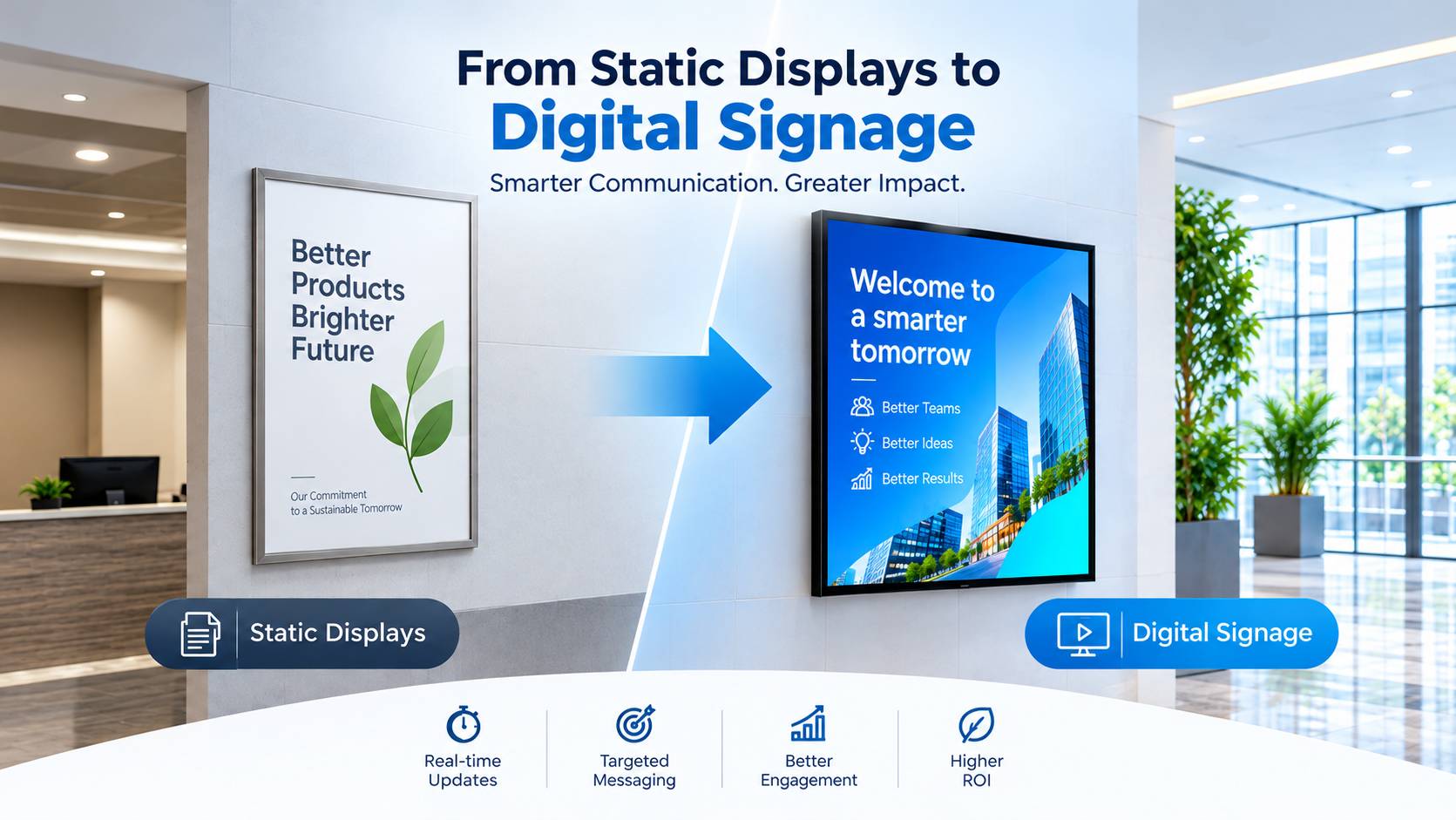
Digital Signage vs Vinyl Printing: Which Is Better for Your Business?
Compare digital signage and vinyl printing across content updates, multi-location management, customer engagement, and operating costs to choose the right solution for your business.
Read More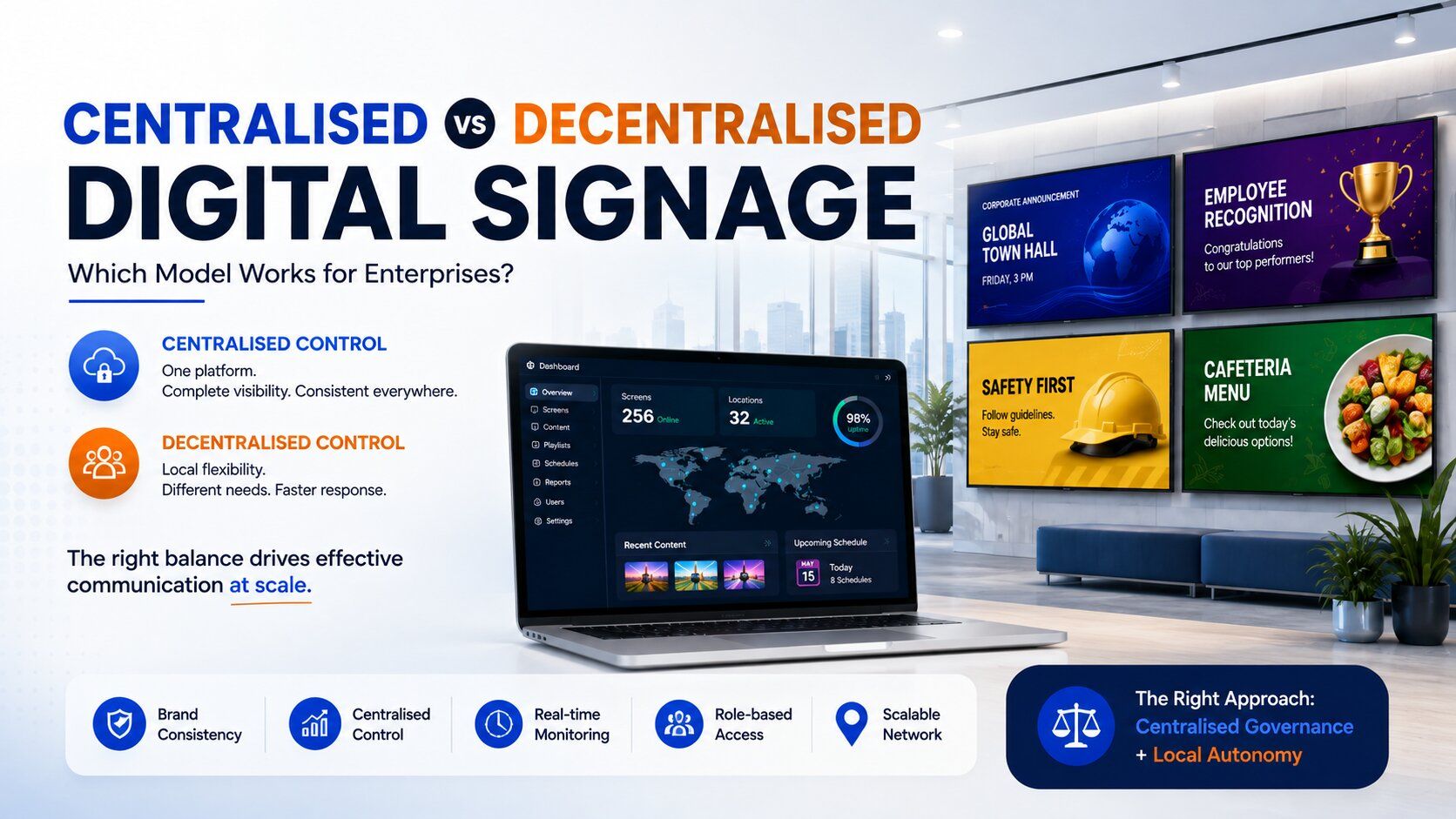
Digital Signage Software: Centralized vs Decentralized Models
A practical look at how enterprises can balance centralised control and local flexibility when managing digital signage across multiple offices, teams and locations.
Read More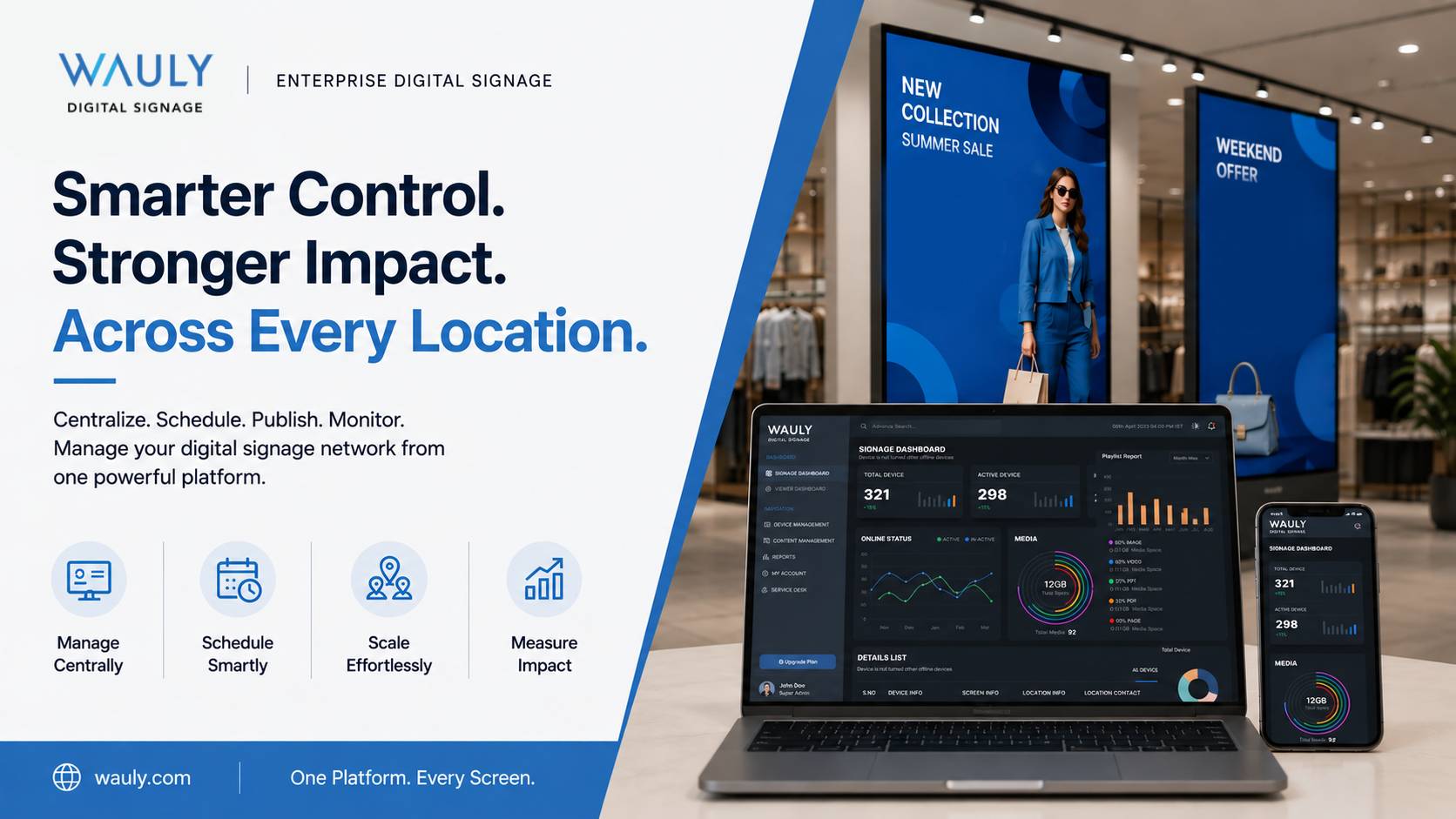
Digital Signage Software: Offline’s New Performance Marketing Benchmark
Explore how digital signage software is redefining performance for retail and other offline businesses by enabling centralized control, smart scheduling, consistent communication, and scalable screen management across every location.
Read More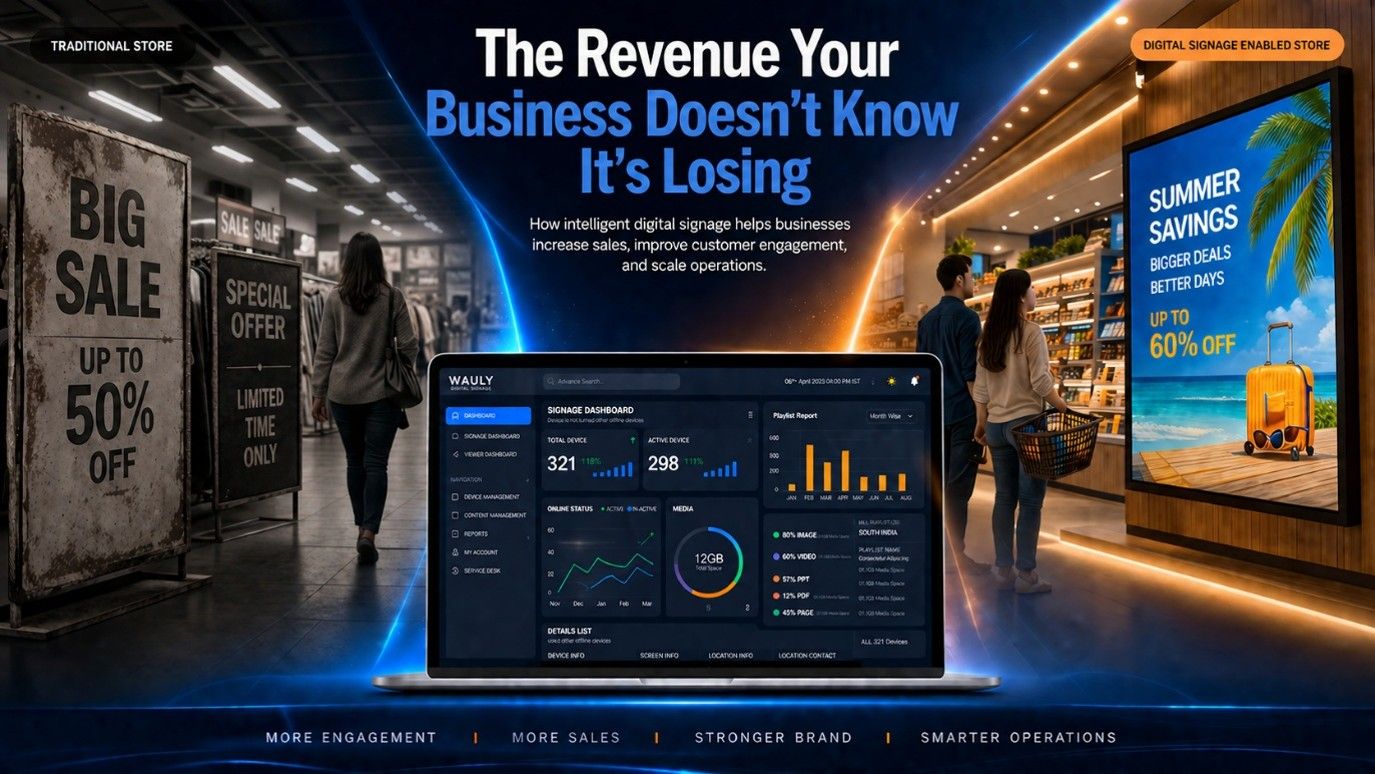
The Revenue Leak Most Businesses Never Measure: Why Digital Signage Is No Longer Optional
Every business invests to bring customers through the door, but many lose revenue once they're inside. Static posters, outdated displays, and manually managed screens fail to influence purchase decisions when they matter most. This blog explores how modern digital signage software helps businesses automate promotions, manage screens remotely, maintain brand consistency, and increase sales across multiple locations. Learn why the real value of digital signage lies not in the screens themselves, but in the software that powers them.
Read More
The Biggest Problem in Internal Communication Isn't Communication. It's Attention.
In today's workplace, information isn't rare, attention is. Organizations that continue measuring communication by the number of emails they send are solving yesterday's problem. The real challenge is ensuring important messages are actually seen, remembered, and acted upon.
Read More